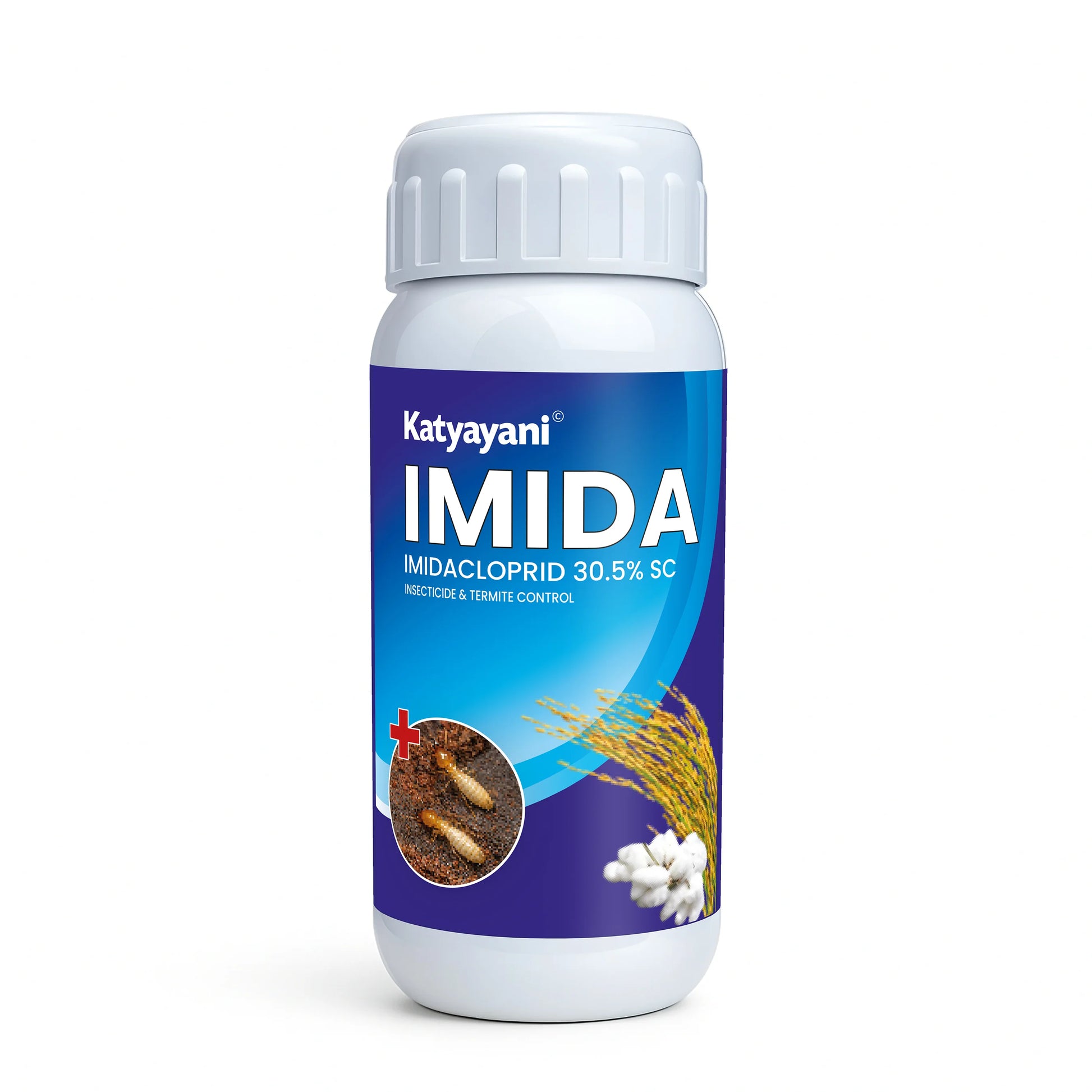
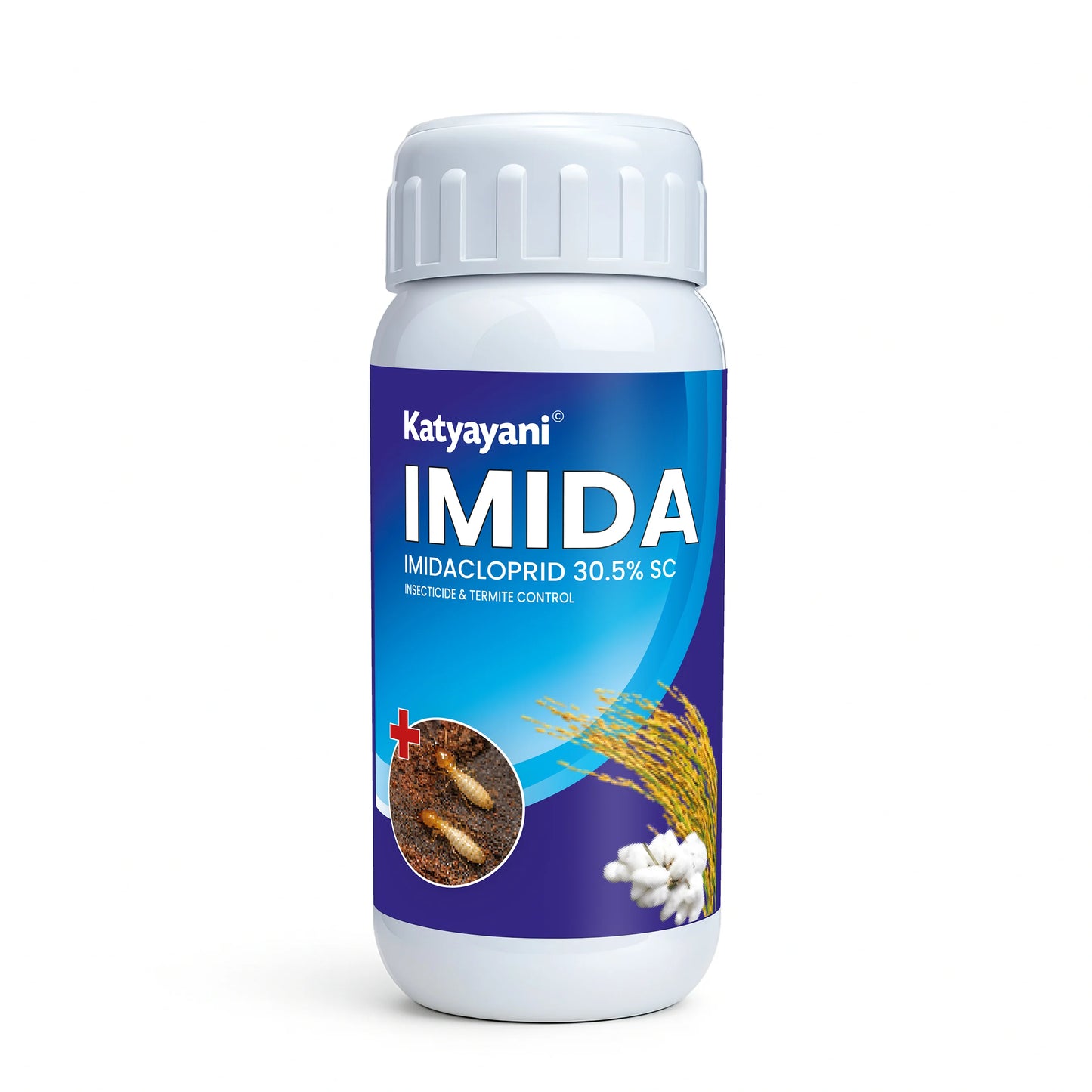
कात्यायनी इमिडा एक प्रणालीगत कीटनाशक है, जिसमें इमिडाक्लोप्रिड 30.5% एससी निलंबन केंद्रित (सस्पेंशन कंसंट्रेट) रूप में मौजूद है।
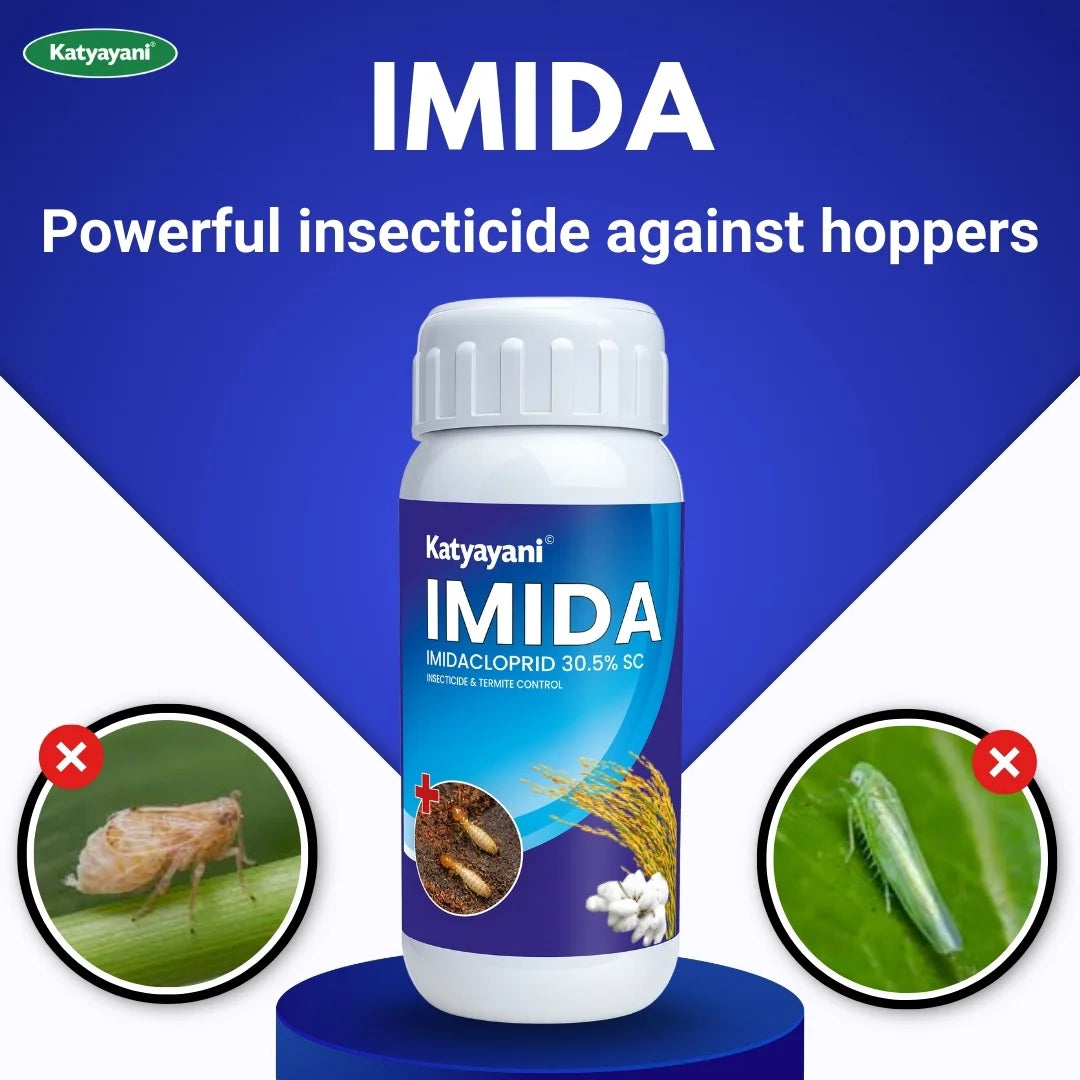
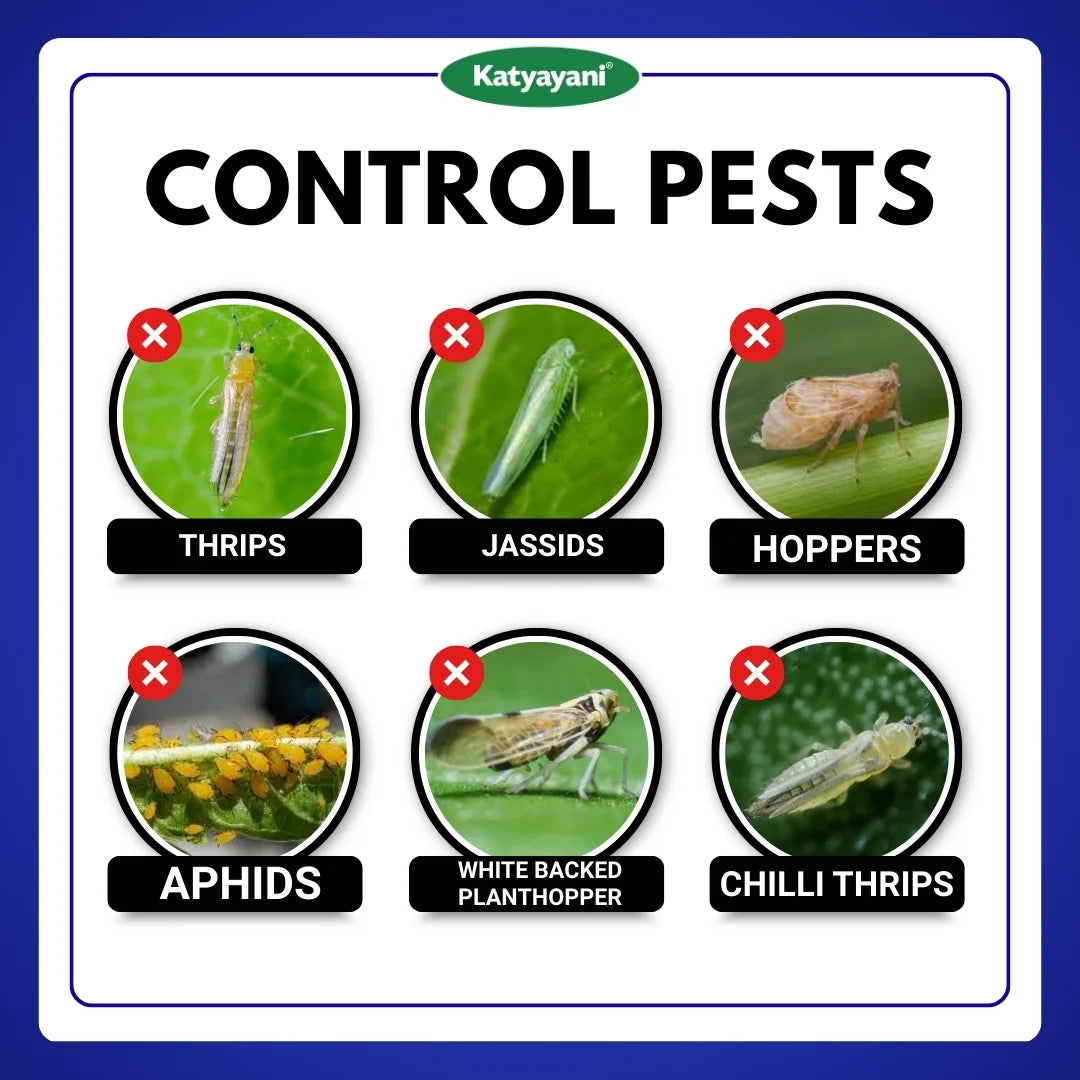
यह एफिड्स, जैसिड्स, थ्रिप्स और ब्राउन प्लांट हॉपर जैसे चूसक कीटों को प्रभावी रूप से नियंत्रित करता है।
कीटनाशक संकेत संचरण प्रणाली को बाधित करता है, जिससे कीड़ों के तंत्रिका तंत्र की विफलता होती है।
पौधे के ऊतकों में प्रणालीगत रूप से प्रवाहित होकर यह दीर्घकालिक सुरक्षा प्रदान करता है।
तकनीकी विवरण:
तकनीकी सामग्री: इमिडाक्लोप्रिड 30.5% एससी
प्रवेश का तरीका: प्रणालीगत
क्रिया विधि: तंत्रिका तंत्र में संकेत संचरण प्रणाली को बाधित कर कीड़े को लकवा मारकर मारता है।
मुख्य विशेषताएं और लाभ:
विस्तृत स्पेक्ट्रम: विभिन्न प्रकार के चूसक कीटों पर प्रभावी।
लक्षित कीट अवस्था: वयस्क और शिशु कीटों पर प्रभावी।
खुराक लेने का प्रकार: चूसक कीटों पर प्रभावी।
फाइटोटॉक्सिसिटी: अनुशंसित खुराक में प्रयोग करने पर गैर-फाइटोटॉक्सिक।
इमिडा (इमिडाक्लोप्रिड 30.5% SC) कीटनाशक के डोज
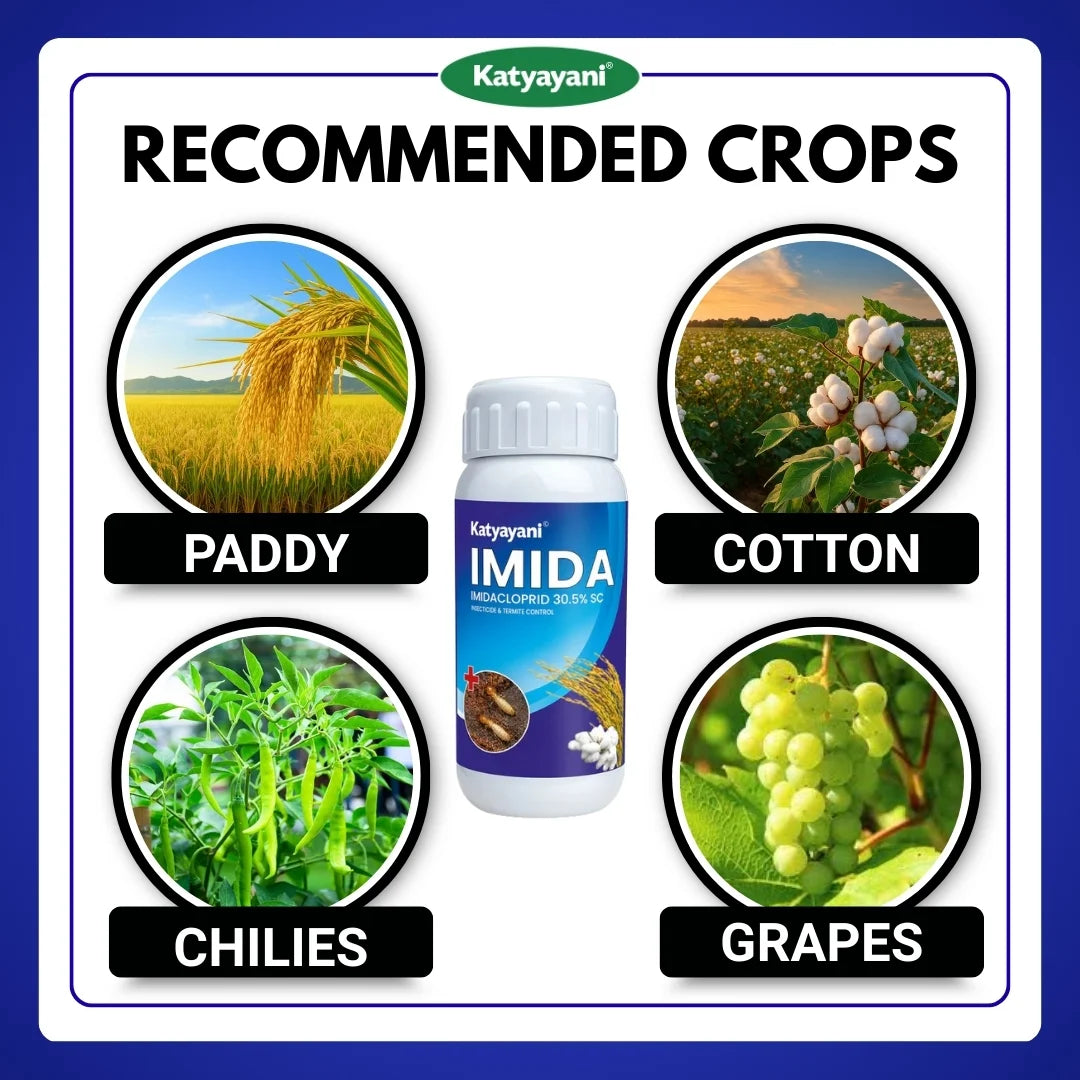
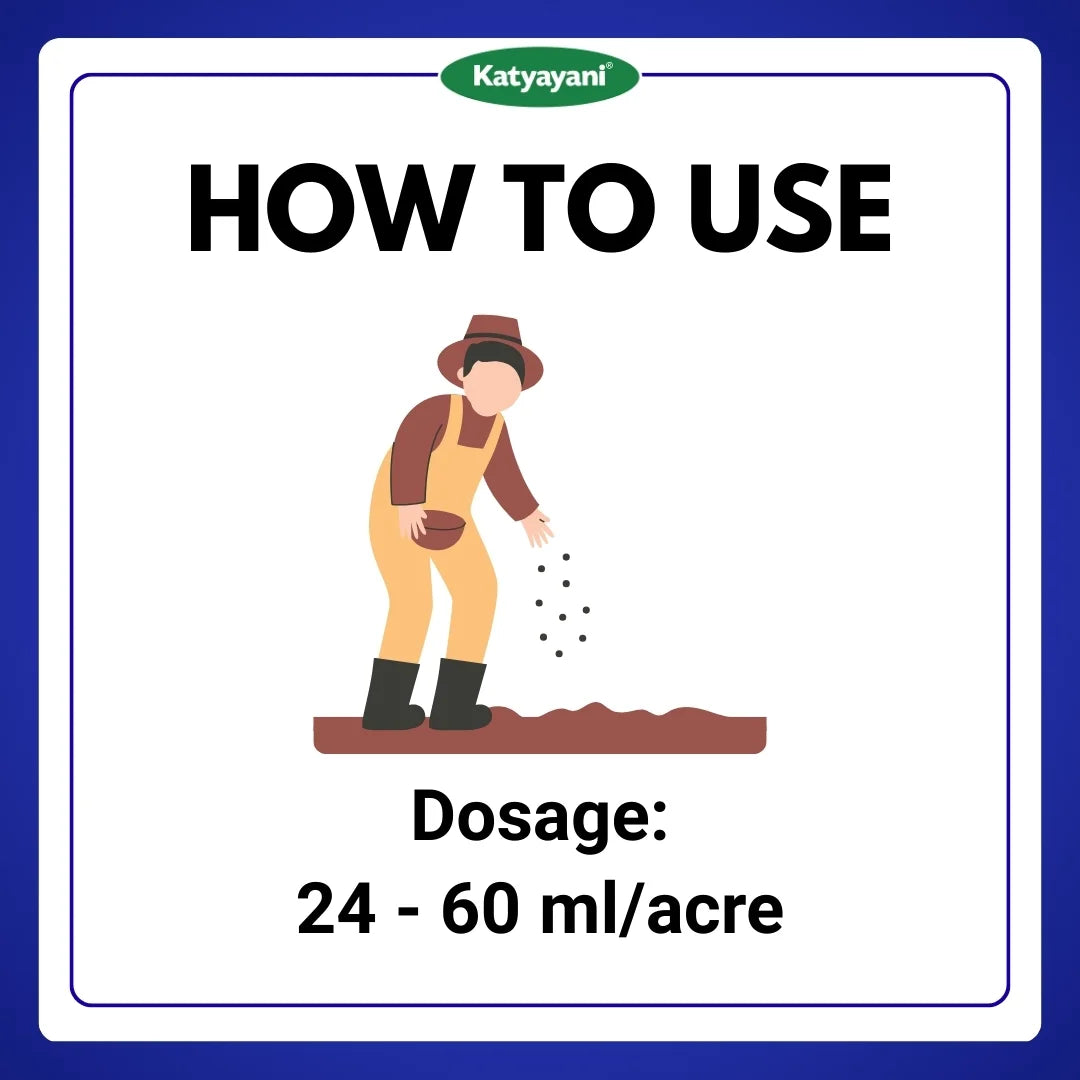
कृषि उपयोग के लिए: 24 - 30 मि.ली./ एकड़
फसल
कीट
फार्मुलेशन (मि.ली./ एकड़ )
कपास
एफिड्स, जैसिड्स, थ्रिप्स
24 - 30 मिली/एकड़
धान
ब्राउन प्लांट हॉपर, व्हाइट-बैक्ड प्लांट हॉपर
24 - 30 मिली/एकड़
मिर्च
माहू, थ्रिप्स
50 - 60 मिली/एकड़
आवेदन विधि
फोलियर स्प्रे: प्रभावी कीट नियंत्रण के लिए अनुशंसित।
इमिडा (इमिडाक्लोप्रिड 30.5% SC) कीटनाशक से सम्बंधित प्रश्न
Q. रसचूसक कीट के लिए सबसे अच्छा कीटनाशक कौन सा है?
A. इमिडा (इमिडाक्लोप्रिड 30.5% SC) रसचूसक कीटों के खिलाफ अनुशंसित कीटनाशक में से एक है।
Q. इमिडाक्लोप्रिड 30.5% SC का उपयोग किन-किन कीटों पर किया जाता है?
A. इमिडाक्लोप्रिड 30.5% SC मुख्य रूप से थ्रिप्स, एफिड्स, जैसिड्स, ब्राउन प्लांट हॉपर और व्हाइट-बैक्ड प्लैन्थॉपर जैसे रसचूसक कीटों को प्रभावी रूप से नियंत्रित करता है।
Q. कपास की फसल में थ्रिप्स और एफिड्स का समाधान क्या है?
A. इमिडा कीटनाशक कपास की फसलों में थ्रिप्स और एफिड्स के लिए अनुशंसित समाधानों में से एक है।
Q. इमिडाक्लोप्रिड 30.5% SC कीटनाशक के डोज क्या है?
A. इमिडाक्लोप्रिड 30.5% SC के न्यूनतम डोज 25 - 30 मि.ली./ एकड़ है।
Q. इमिडाक्लोप्रिड 30.5% SC की प्रमुख लक्षित फसलें कौन सी हैं?
A. इमिडाक्लोप्रिड 30.5% SC के लिए प्रमुख लक्षित फसलों में कपास, चावल, गन्ना, आम, मूंगफली, अंगूर, मिर्च, टमाटर और विभिन्न सब्जियों की फसल भी शामिल हैं।
Imidacloprid 30.5% SC is a systemic insecticide used to control sucking pests in cotton, rice, chilli, sugarcane, mango, groundnut, grapes, tomato and vegetables. It kills aphids, jassids, thrips, whiteflies, brown planthopper and termites. The plant absorbs it, so pests die when they feed, including those on the underside of leaves.
How much imidacloprid 30.5% SC do I use?
+
Use 24 to 30 ml per acre for cotton and rice, and 50 to 60 ml per acre for chilli, mixed in 150 to 200 litres of water. One 100 ml bottle treats roughly 3 to 4 acres of cotton. Always follow the dose printed on your pack label.
How much imidacloprid per litre of water?
+
At 30 ml per acre in 200 litres of water, imidacloprid 30.5% SC works out to about 0.15 ml per litre, or 2 to 2.5 ml in a 15 litre knapsack pump. For chilli at 60 ml per acre, use about 4 to 4.5 ml per pump.
What insects are killed by imidacloprid?
+
Imidacloprid kills sucking pests: aphids, jassids, leafhoppers, thrips, whiteflies, brown planthopper, white-backed planthopper, mealybugs and termites. It does not control caterpillars, bollworms or mites. For those you need a different molecule, so identify the pest before spraying.
When should I apply imidacloprid?
+
Apply at the first sign of sucking pests, not after the population has built up. Imidacloprid is systemic and works best early. In cotton and chilli that usually means 25 to 30 days after sowing; in rice, at the first appearance of planthoppers at the base of the plant.
What is the mixing ratio for imidacloprid?
+
Roughly 2 to 2.5 ml per 15 litre pump for cotton and rice, and 4 to 4.5 ml per pump for chilli. Fill the pump halfway, add the measured dose, stir, then top up with water. Never pour it into an empty tank.
What time of day is best to apply insecticide?
+
Spray before 10 in the morning or after 4 in the evening. Midday heat evaporates the spray before it is absorbed, and strong sun can scorch treated leaves. Avoid spraying if rain is expected within 4 to 6 hours, and do not spray in strong wind.
What is the price of imidacloprid 30.5% SC insecticide?
+
Katyayani Imida costs ₹280 for 100 ml, ₹447 for 250 ml, ₹795 for 500 ml and ₹1,459 for 1 litre against an MRP of ₹2,160. Bulk packs run to 10 litres. At 30 ml per acre, one litre treats about 33 acres.
Imidacloprid 30.5% SC price in India
+
Imidacloprid 30.5% SC sells for ₹280 per 100 ml and ₹1,459 per litre from Katyayani, direct from the manufacturer with no dealer margin. Larger packs bring the per-litre rate down. Free delivery on orders above ₹500, with cash on delivery available.
Imidacloprid 30.5% SC dose per acre
+
24 to 30 ml per acre in cotton and rice. 50 to 60 ml per acre in chilli. Mix into 150 to 200 litres of water and spray to full leaf cover, including the underside where sucking pests feed.
Imidacloprid 30.5% SC uses
+
Controls sucking pests in cotton, rice, chilli, sugarcane, mango, groundnut, grapes, tomato and vegetables. Works systemically, so the plant carries it to new growth and to leaf undersides a spray cannot reach. Effective on both nymphs and adults.
Is imidacloprid safe for my crop?
+
Imidacloprid 30.5% SC is not phytotoxic when used at the label dose. Overdosing wastes product and can stress the crop without improving control. Wear gloves and a mask while spraying, keep livestock out of the treated field, and observe the pre-harvest interval on the label.
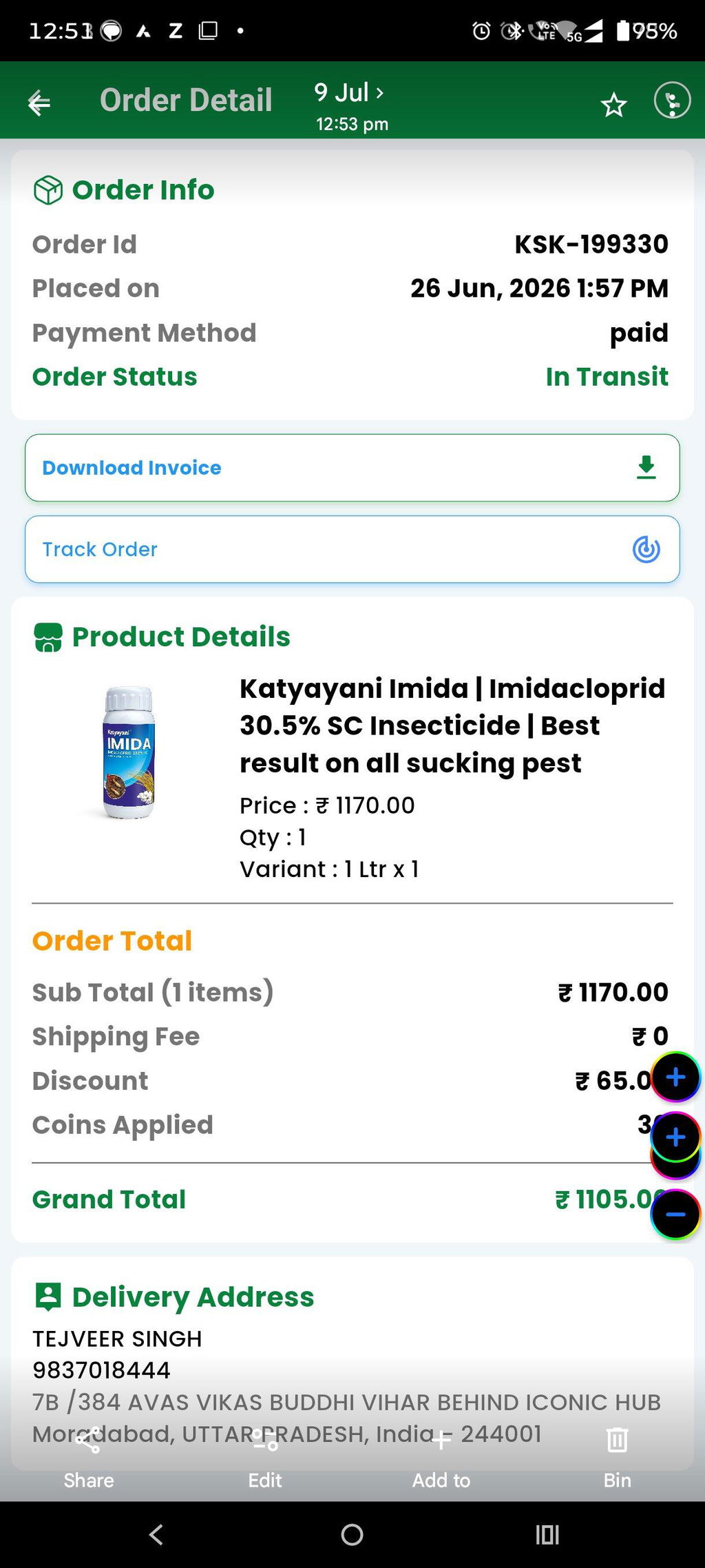
Absolutely fake site i paid in advance on 26th June 2026 and order has not been delivered till date I.e 11 October 2026 my plants died waiting for the treatment..Fake customer care..Guys dont buy anything from them..It's a cheating...such we sites and be blocked..Very very bad experience
S
Sumit das
I don't get any products which is oder
I have oder imida 30.5 100ml on 23 august, 26 by advance payment rs. 28. In my mobile no 8759447905 1.40pm . But I don't get any response from u.
J
Jainullabdeen
Payment link
To pay through net is impossible in your app
S
Suresh Reddy Warangal, Telangana
Chilli me aphids clean ho gaye - good for aphids
Packaging acchi thi, result aur bhi accha.
D
Dinesh Patel Surat, Gujarat
Fast delivery and useful product - value for money
Cotton crop me aphids aur thrips kaafi the, Imida ne sab clear kar diya.