




Katyayani Krishi Direct
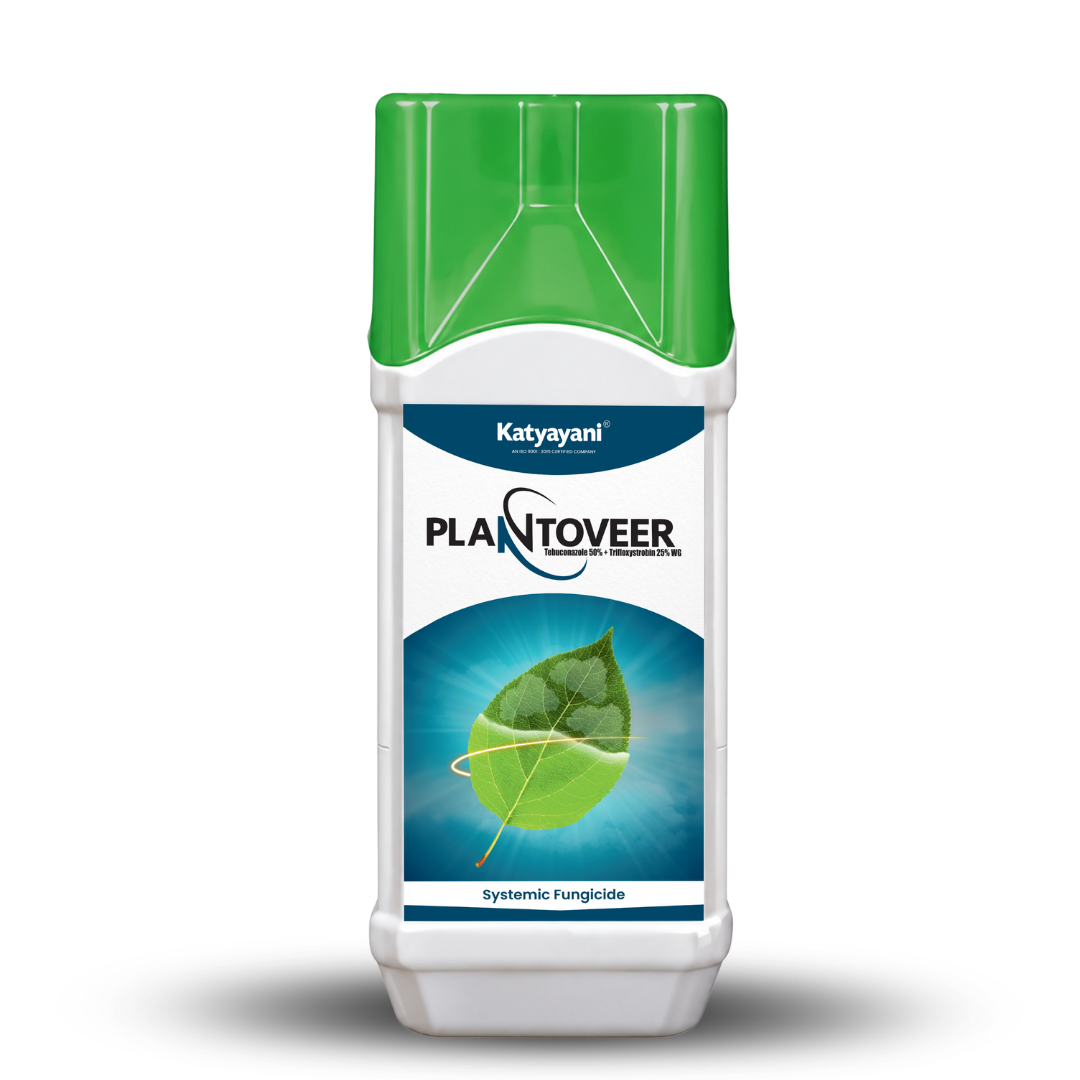
Katyayani PlantoVeer – Tebuconazole 50% + Trifloxystrobin 25% WG Dual-Action Systemic Fungicide
Katyayani PlantoVeer – Tebuconazole 50% + Trifloxystrobin 25% WG Dual-Action Systemic Fungicide


Product Description
Technical Name: Tebuconazole 50% + Trifloxystrobin 25% WG
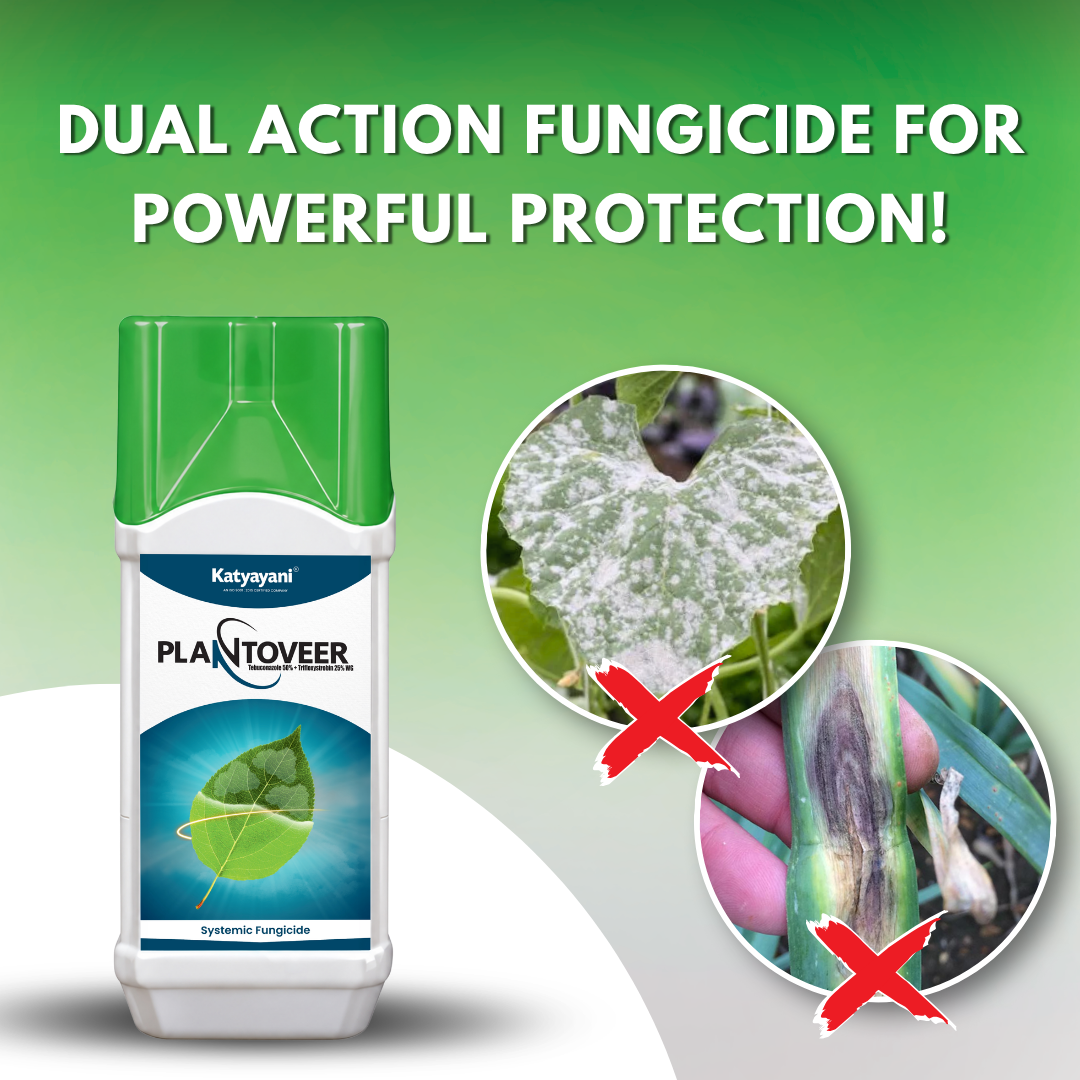
Katyayani PLANTOVEER is a broad-spectrum systemic fungicide designed to protect crops from a wide range of fungal diseases. Formulated with dual active ingredients, Tebuconazole and Trifloxystrobin, it provides preventive and curative action, ensuring healthy crop growth, improved quality, and higher yields. The product is suitable for use in cereals, vegetables, fruits, and other crops, offering long-lasting protection and versatility.
Target Diseases of Tebuconazole 50% + Trifloxystrobin 25% WG
-
Sheath Blight
-
Blast
-
Rust
-
Powdery Mildew
-
Leaf Spot
-
Anthracnose
-
Yellow Rust
-
Early Blight
-
Neck Blast
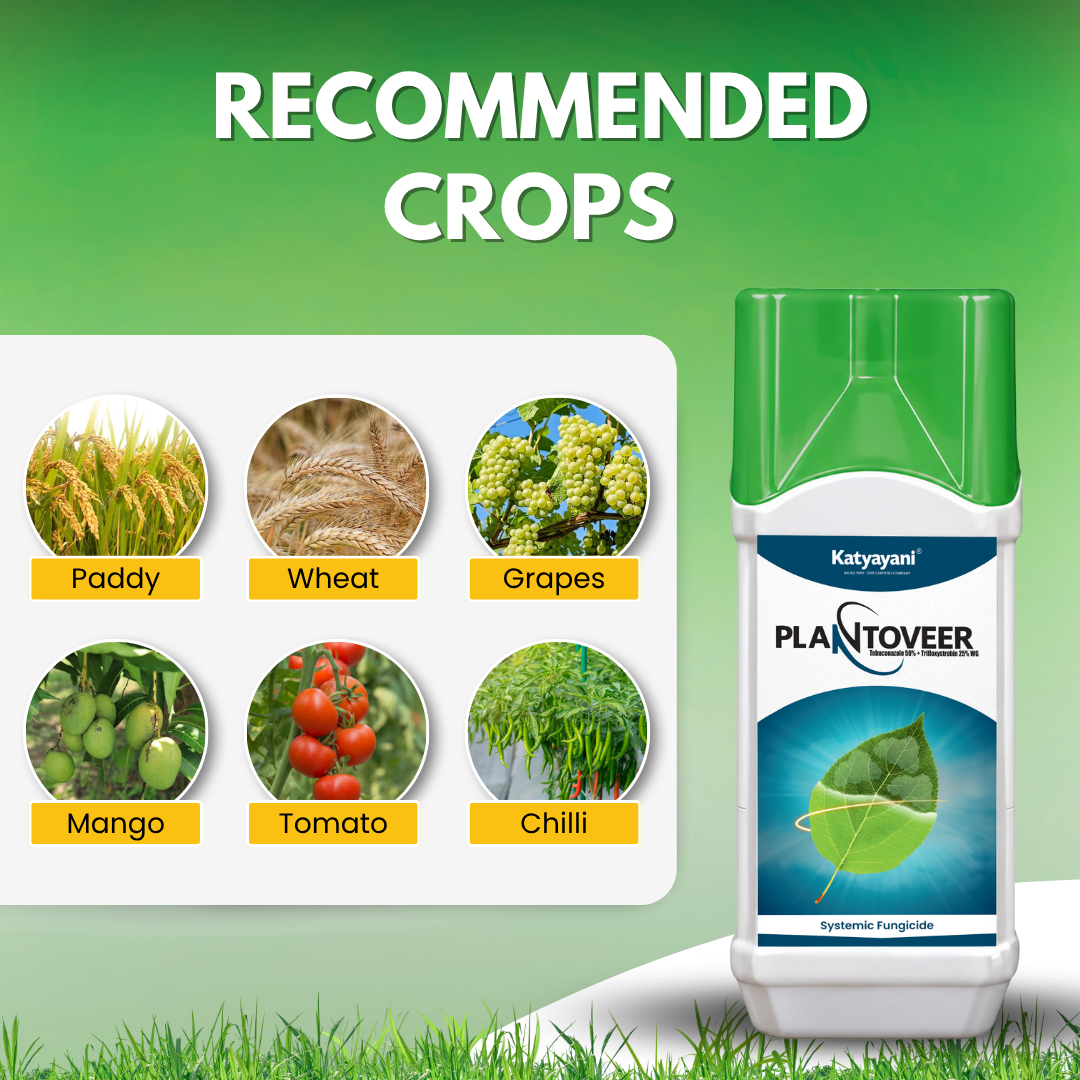
Target Crops
-
Rice
-
Wheat
-
Grapes
-
Mango
-
Tomato
-
Chilli
Mode of Action
Tebuconazole:
A systemic fungicide that inhibits sterol biosynthesis in fungal cell membranes, leading to cell collapse and disease prevention. It targets internal fungal infections and spreads evenly within the plant.
Trifloxystrobin:
A strobilurin fungicide that blocks fungal respiration by inhibiting electron transfer, leading to energy depletion and cell death. Its translaminar movement ensures deep penetration into leaf tissues for long-lasting protection.
Tebuconazole 50% + Trifloxystrobin 25% WG Dosage
|
Crop |
Target Disease |
Dose |
Application Method |
|
Rice (Paddy) |
Sheath Blight, Leaf Blast, Neck Blast, Glume Discoloration (Dirty Panicle) |
80 g/Acre |
Spray |
|
Tomato |
Early Blight |
140 g/Acre |
Spray |
|
Grapes |
Powdery Mildew |
70 g/Acre |
Spray |
|
Chilli |
Powdery Mildew, Anthracnose, Alternaria Leaf Spot |
100 g/Acre |
Spray |
|
Wheat |
Yellow Rust, Powdery Mildew |
120 g/Acre |
Spray |
|
Mango |
Powdery Mildew, Anthracnose |
75–100 g/100 L Water |
Spray |
Application Method
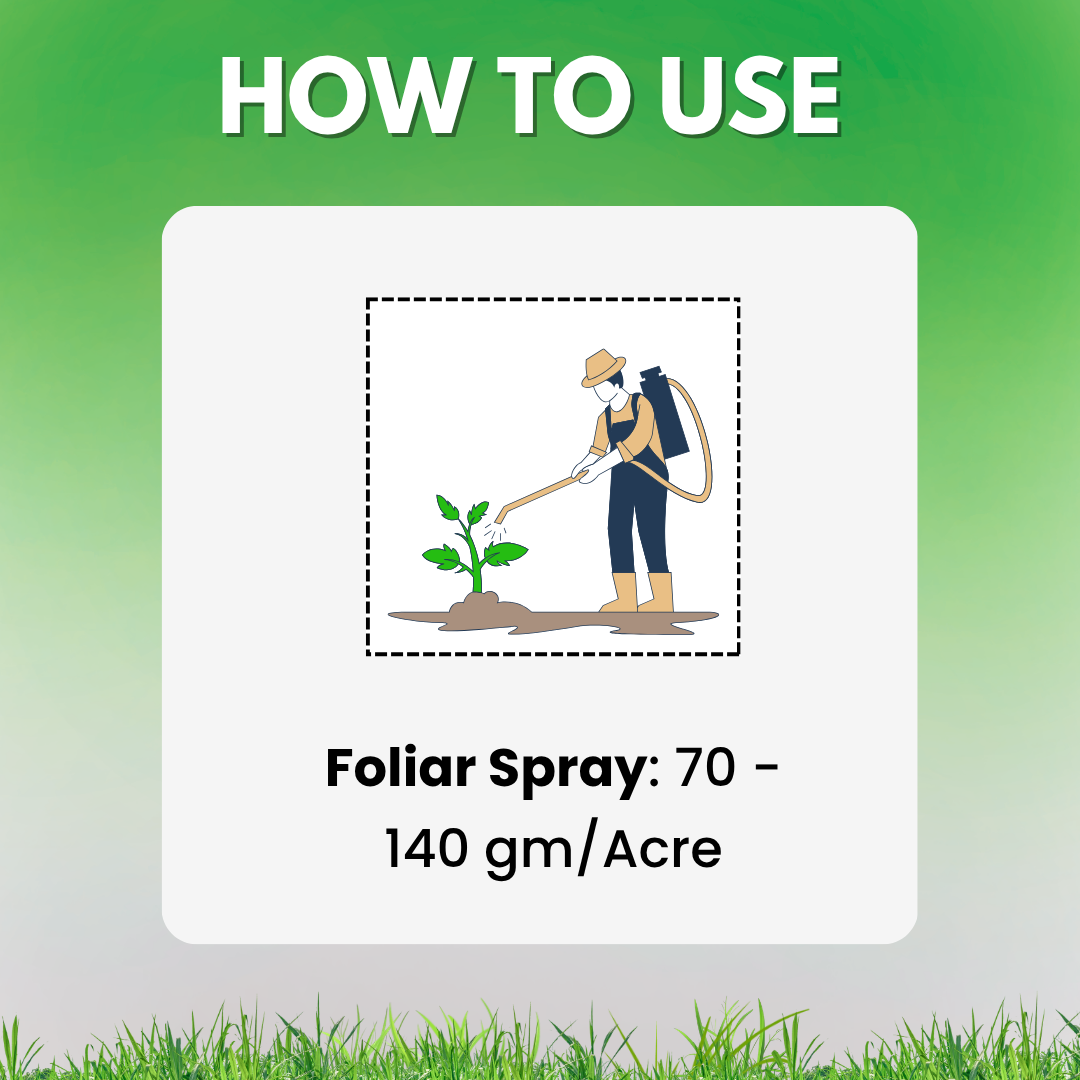
Spraying: Use a knapsack sprayer or power sprayer for uniform application.
Uses of Tebuconazole 50% + Trifloxystrobin 25% WG
-
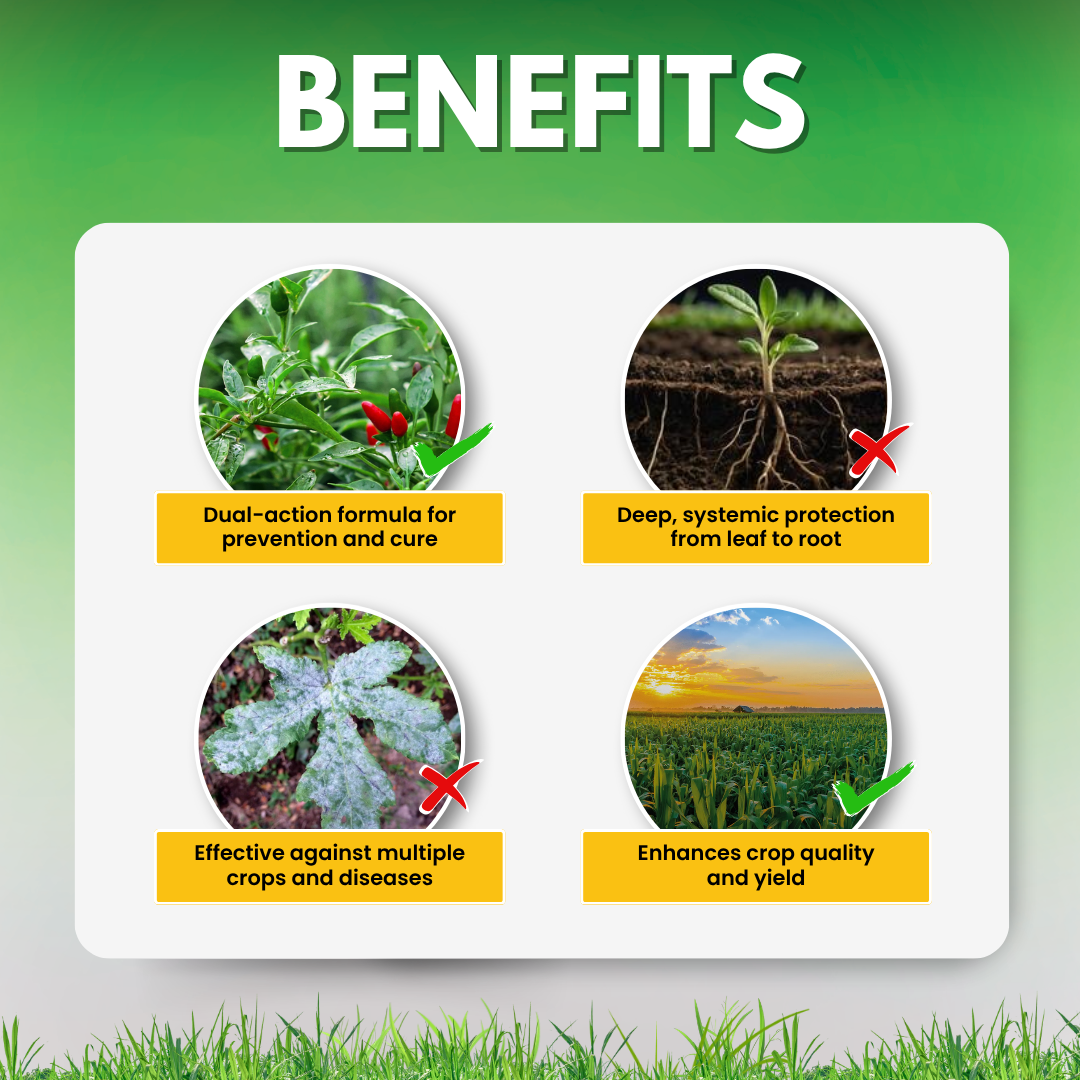
Broad-Spectrum Control: Targets multiple fungal diseases across a variety of crops, reducing the need for multiple fungicides.
-
Dual-Action Protection: Provides both preventive and curative properties to control existing infections and help prevent new infections.
-
Improved Crop Quality: Protects crops from fungal damage, supporting healthier plants and better-quality produce.
-
Long-Lasting Effect: Provides extended protection due to its systemic and translaminar properties.
Frequently Asked Questions
1. What are the uses of Tebuconazole 50% + trifloxystrobin 25% WG?
What is trifloxystrobin 25 WG used for?
3. what is Tebuconazole 50% used For?
4. What is the main difference between trifloxystrobin and azoxystrobin ?
5. What are the benefits of Tebuconazole?
6. How to apply tebuconazole?
7. Can we mix Tebuconazole with insecticide?
8. Is tebuconazole a fungicide?
9. Which fungicide contains tebuconazole?
10. Best product Which Contain Tebuconazole 50% + Trifloxystrobin 25% WG?
11. What are the trade names for trifloxystrobin?
12. What is tebuconazole used for?


