


Katyayani Organics
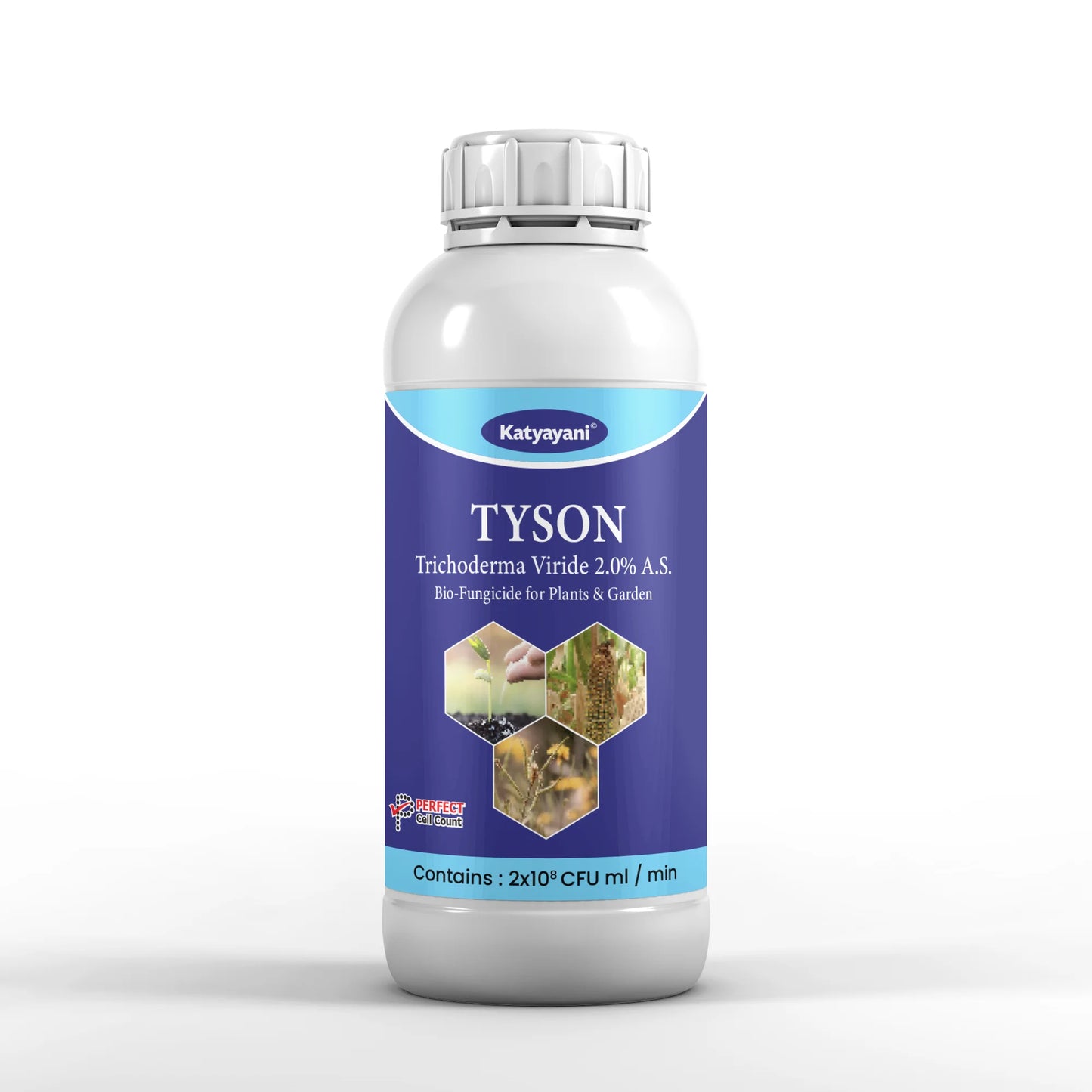
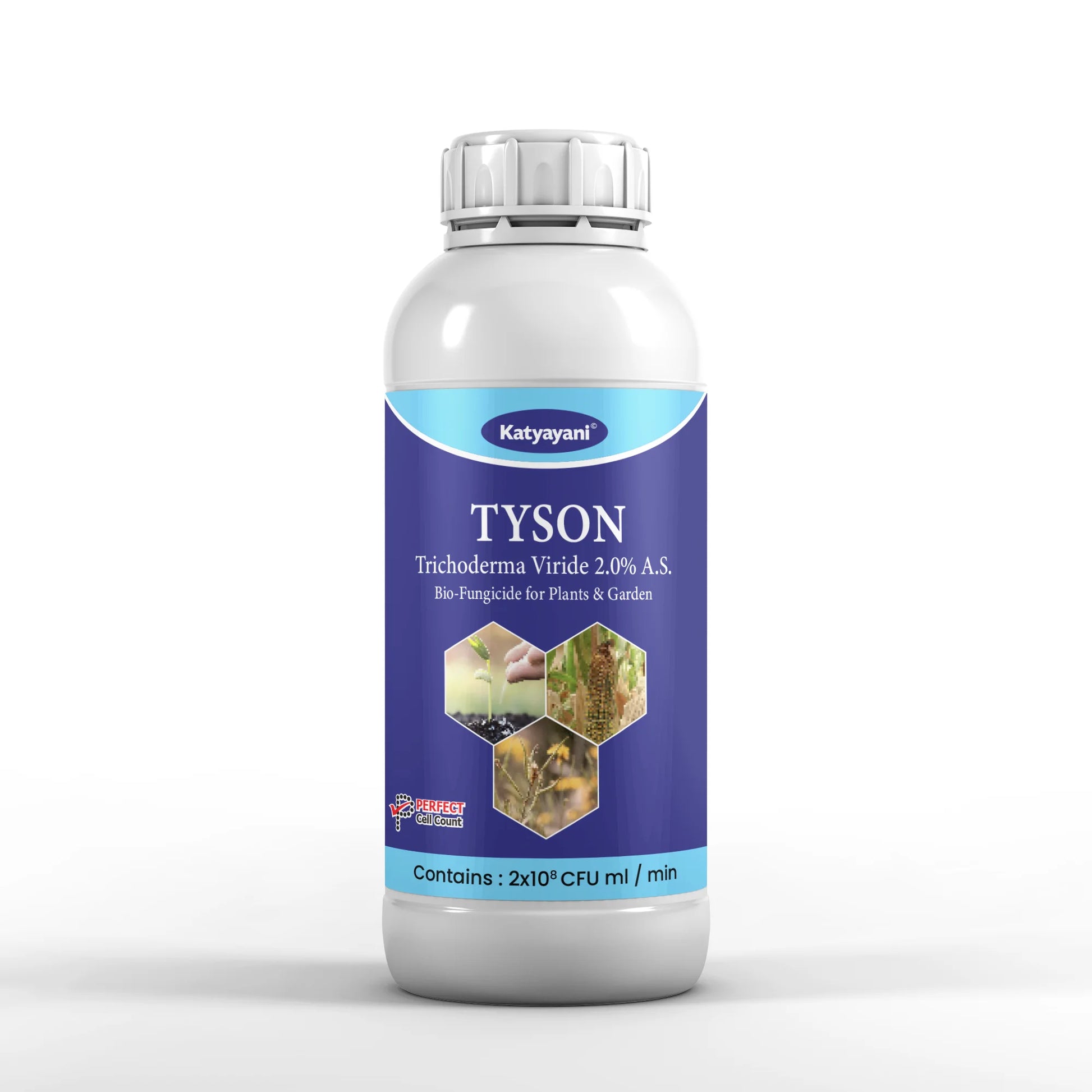
Katyayani Tyson Trichoderma Viride Liquid Bio-Fungicide
Katyayani Tyson Trichoderma Viride Liquid Bio-Fungicide


Product Description
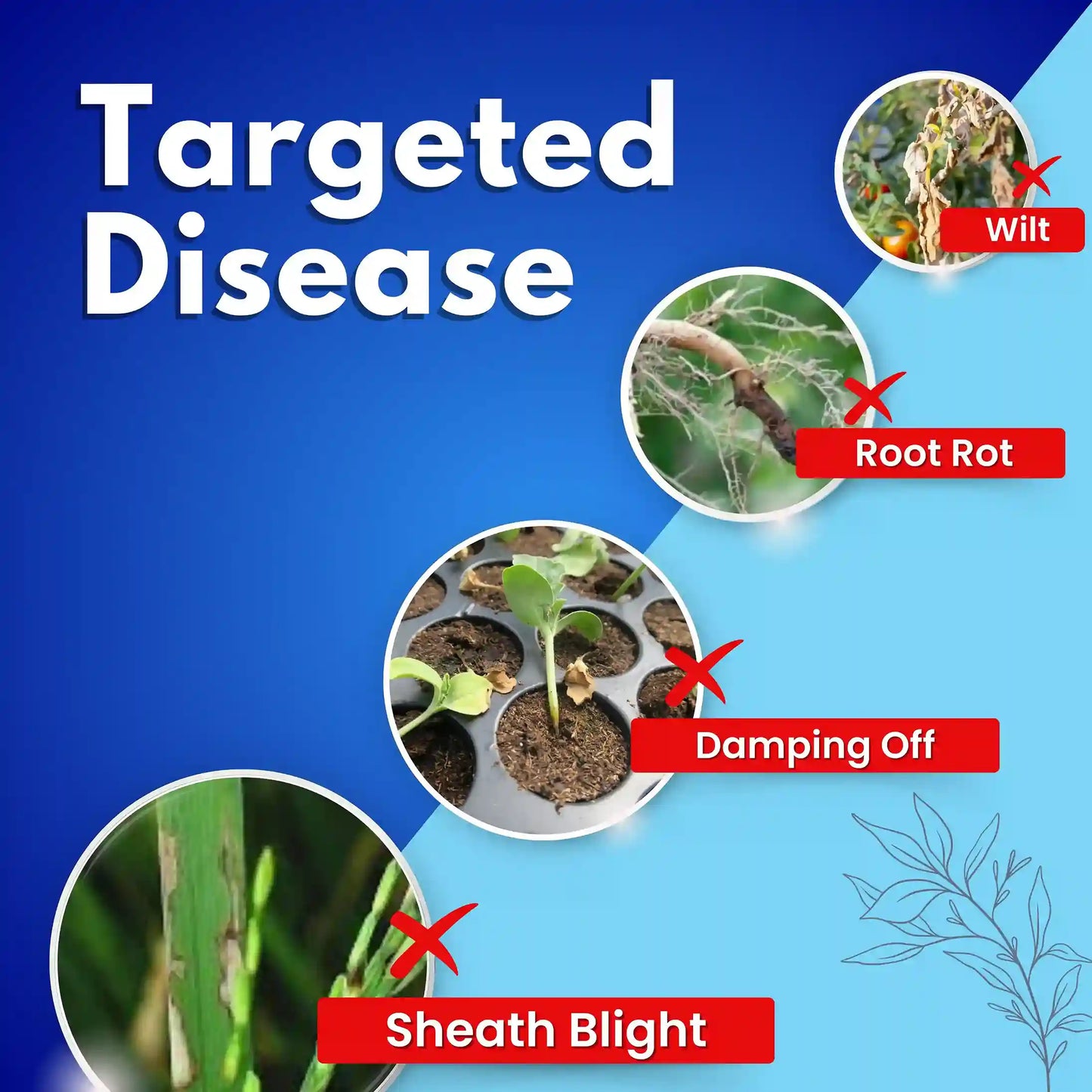
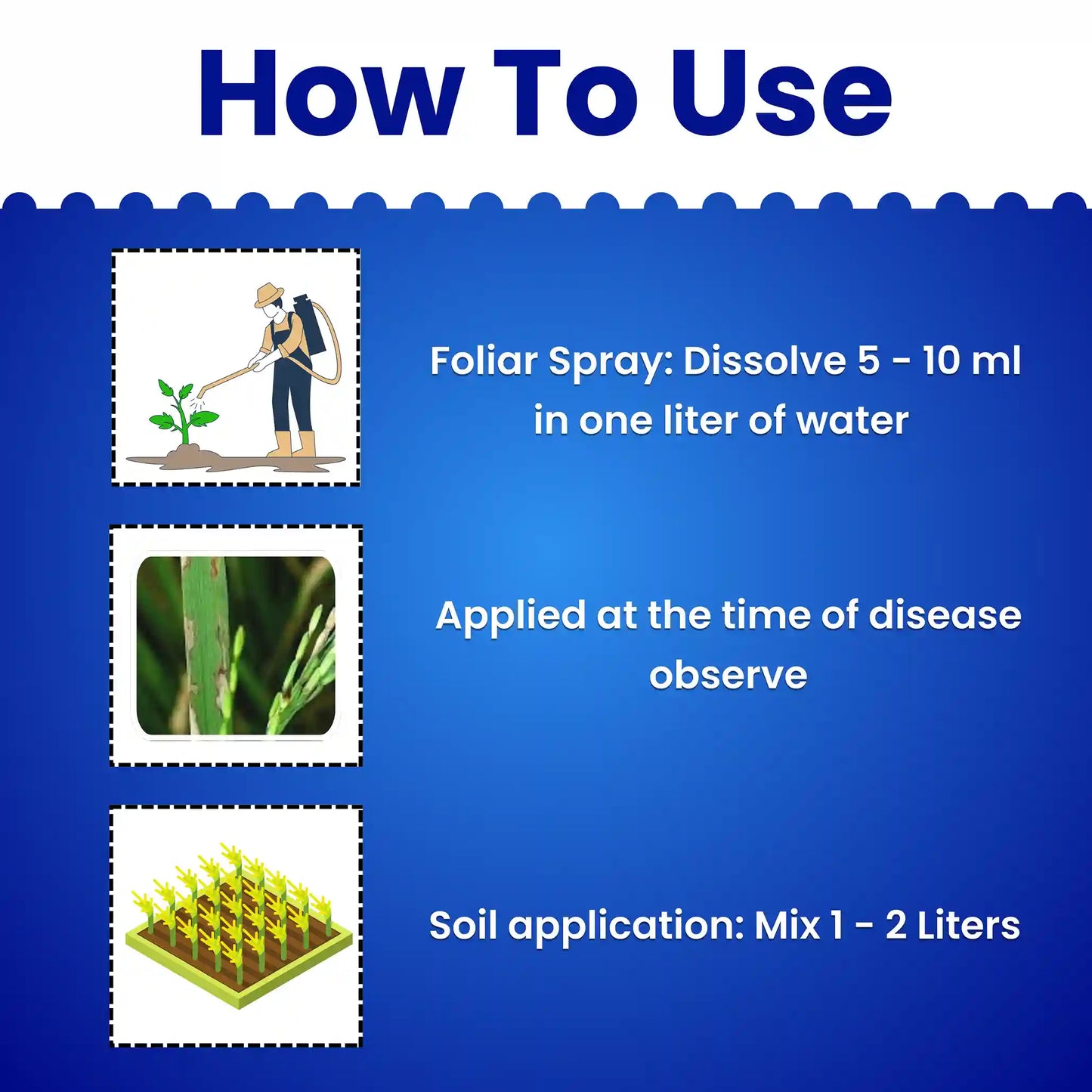
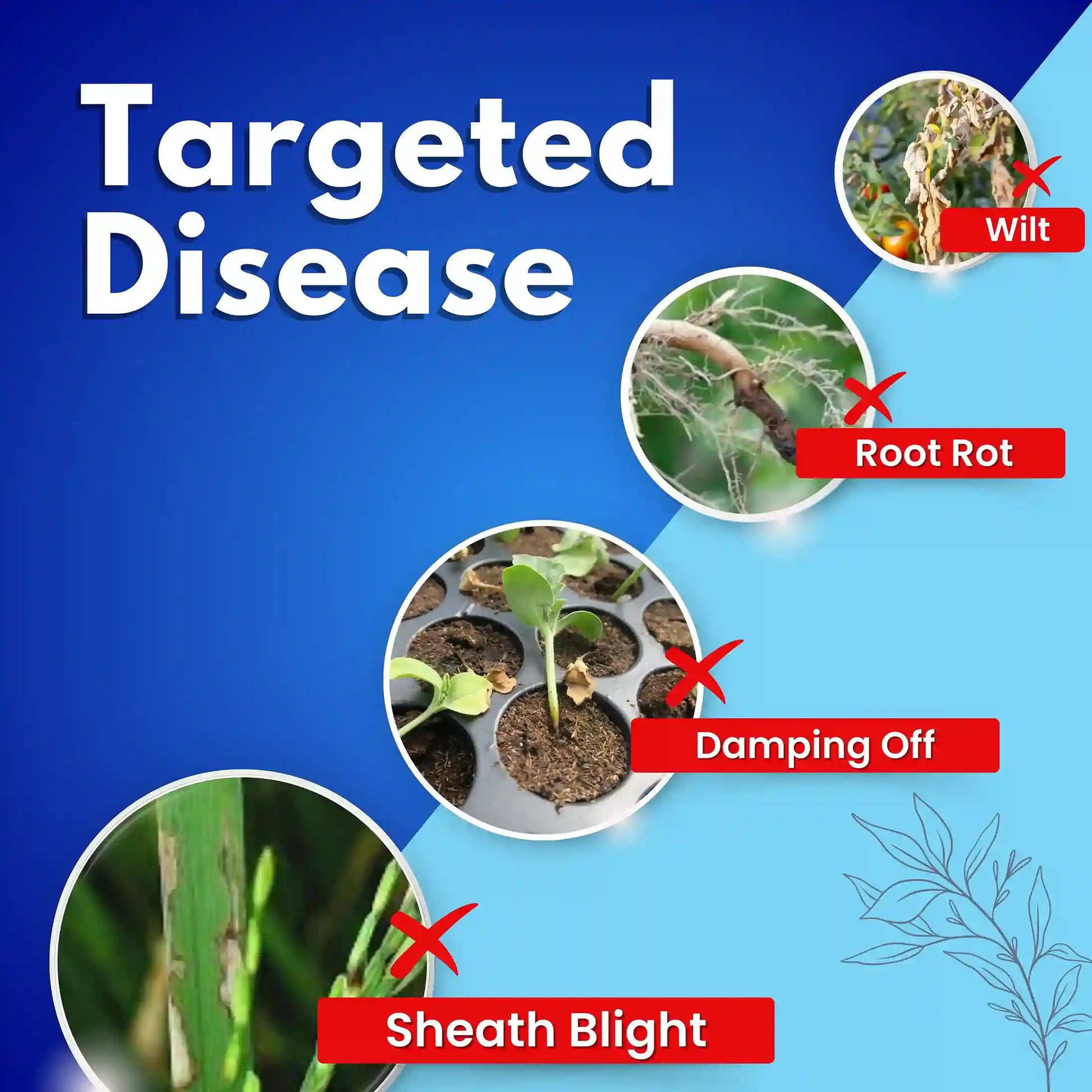
Katyayani Tyson is a liquid Trichoderma viride bio-fungicide for soil-borne and seed-borne diseases: wilt, root rot, damping off, collar rot, stalk rot, seed rot, seedling wilt and sheath blight. Use 1-2 L per acre for soil drenching in 200 L of water, or 5-10 ml per litre of water as a foliar spray. It works both preventively and curatively and also supports root growth.
Quick Facts
| Item | Detail |
|---|---|
| Product | Katyayani Tyson Bio-Fungicide |
| Technical name | Trichoderma viride (liquid) |
| Type | Bio-fungicide (beneficial fungus) |
| Mode of entry | Contact |
| Action | Preventive and curative |
| Dose per acre | 1-2 L (soil drench in 200 L water) |
| Dose per litre of water | 5-10 ml (foliar spray) |
| Pack sizes | 1 L, 3 L, 5 L, 10 L, 25 L |
| Storage | Cool, dry place, away from direct sunlight |
What Is in Tyson? (Composition)
Tyson contains Trichoderma viride, a beneficial fungus. It degrades the cell wall of disease-causing fungi. It is eco-friendly, safe for soil health and beneficial microbes, and shows no phytotoxic effects when used at the recommended dose. Check the label for the spore count (CFU) per ml.
How Does It Work, and Is It Preventive or Curative?
Both preventive and curative. Tyson works in four ways:
- Competition: it competes with disease fungi for space and nutrients on the root.
- Antibiosis: it makes antifungal compounds that kill harmful fungi.
- Parasitism: it attacks and breaks down the cell walls of disease fungi.
- Induced resistance: it triggers the plant's own defence, so the plant resists disease better.
It also gives a phytotonic effect, improving root growth and plant vigour.
Crop, Disease and Dose Table
Target diseases: Wilt, Root Rot, Damping Off, Sheath Blight, Stalk Rot, Collar Rot, Seedling Wilt, Seed Rot. Dose per acre: 1-2 L. Dose per litre of water: 5-10 ml.
| Crops |
|---|
| Chilli, Pigeon Pea, Pulses, Cowpea, Chick Pea, Paddy, Cauliflower, Brinjal, Cabbage, Tomato, Bengal Gram, Sunflower |
How to Use Tyson (Method and Dose)
| Method | How to apply |
|---|---|
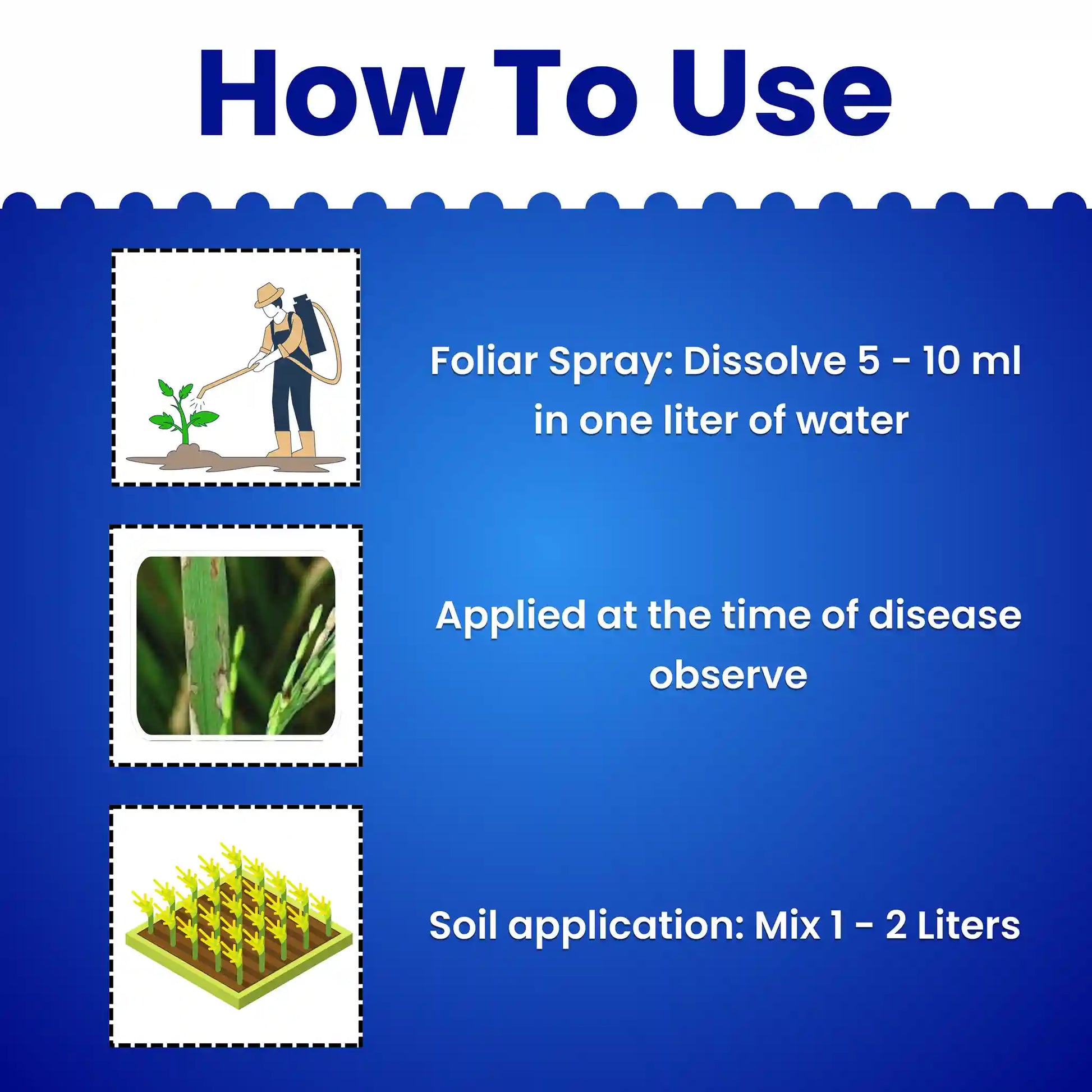
| Soil drenching | Mix 1-2 L per acre in 200 L of water and drench the soil around the root zone |
| Foliar spray | Dissolve 5-10 ml per litre of water and spray on both sides of the leaves, in the evening |
| Seed treatment | Mix 8-10 ml per kg of seed, coat evenly, dry in shade, then sow |
| Seedling dip | Mix 500 ml in 50 L of water, dip seedlings for 30 minutes and transplant at once |
| Nursery bed treatment | Mix 500 ml with 10 kg of compost and broadcast per acre |
Compatibility and Precautions
- Store in a cool, dry place away from direct sunlight.
- No phytotoxic effects are reported when used as per the recommended dose.
- Check the label for tank-mix compatibility and the waiting period.
Disclaimer
Use as per label directions. Wear gloves, mask and full-sleeve clothing while spraying. Keep away from children, food and animals. Read the label before use. Results depend on crop stage, disease pressure and weather.
Frequently Asked Questions
What is Katyayani Tyson Trichoderma viride used for?
What is the dose of Trichoderma viride liquid per litre of water?
What is the dose of Tyson per acre?
What is the price of Katyayani Tyson Trichoderma viride?
How and when do I apply Tyson?
Which crops is Tyson for?
What is the technical name of Tyson?
Is Trichoderma viride a fungicide or a fertilizer?
How do I use Tyson for seed treatment and nursery in November-December?
How do farmers search for Trichoderma viride?
Which pack sizes are available and where do I buy it?
Is Tyson safe for beneficial soil microbes and plants?